
Human-Centered Assistance Systems in Manufacturing
Date:
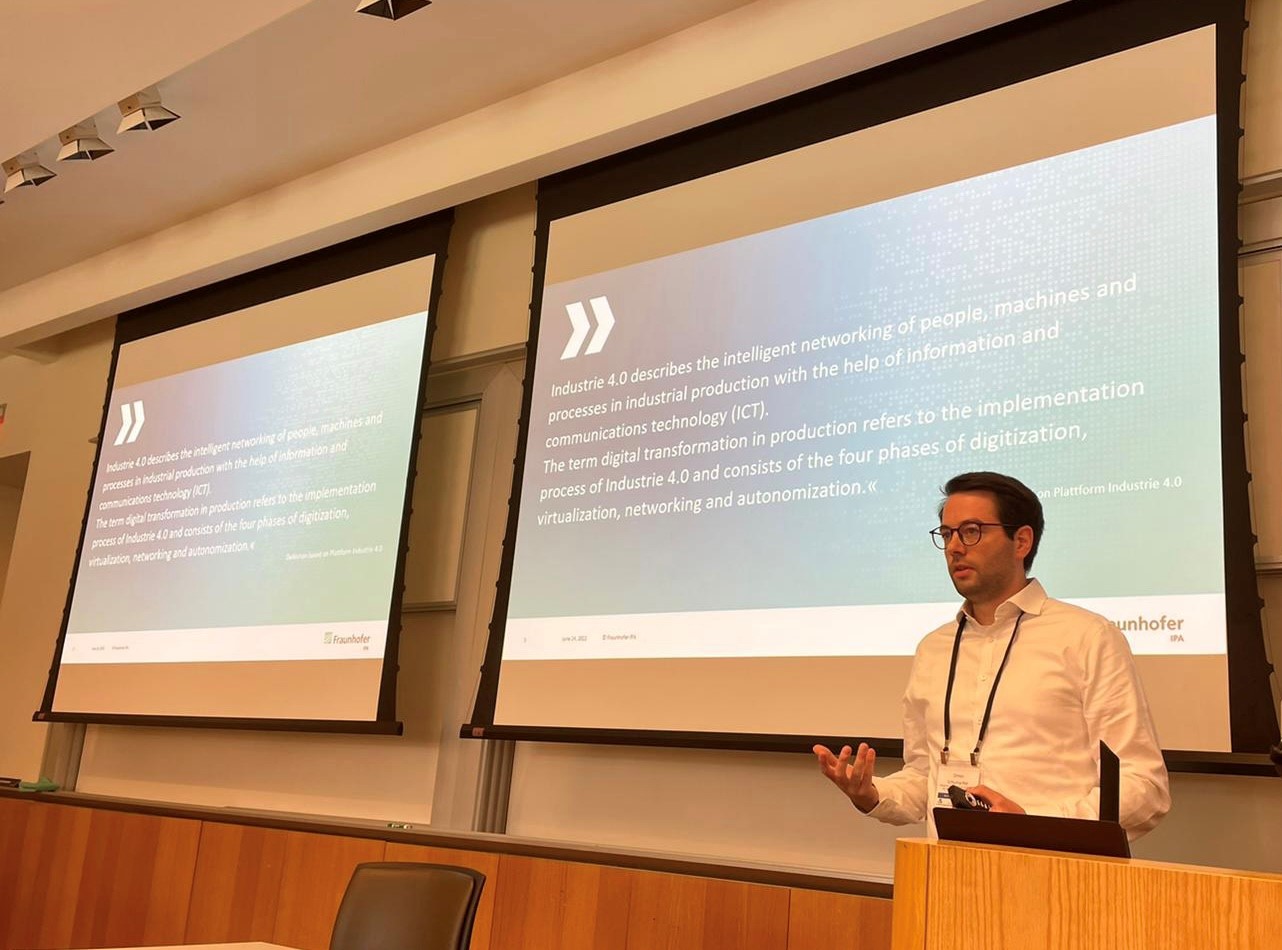
Panel presentation at the Wharton School of the University of Pennsylvania.
Abstract: Smart manufacturing is associated with organizational and technological changes in industrial labor systems. Automation and digitalization technologies can be used to augment physical and informational assistance of workers. At Fraunhofer Future Work Lab, we conduct research on digital methods and technologies for labor augmentation with humans as the central users in the work systems of the future. For this, an own classification of assistance systems (physical, informational, decision-making) in eight technological categories is used. Physical assistance systems, from connected lifting aids to exoskeletons and collaborative robots, reduce the physical strain on workers and make their work easier. Informational assistance systems help providing the right information to the user at the right time and the right place, e.g. wearables assisting workers with valuable context information in more and more complex work environments. Decision-making assistance systems can help workers plan and prioritize tasks. Employees are assisted by artificial intelligence and data-based systems in making complex decisions, giving them more time to focus on value-adding activities. With over 60 use cases implemented at the Future Work Lab, we are studying the user acceptance of assistance systems and their labor augmentation in quantitative and qualitative user studies. The public-private partnership involves all stakeholders to act as active parties in the open-innovation design process of technological and organizational solutions, including technology providers and adopters, research institutions, unions and works councils, business associations and private institutions, press, media, politics and all members of society.
Link to the ISA conference page: ISA Annual Conference 2022
 (c) Simon Schumacher